
Essential Foundation Repair Products for Home Improvement Projects
Get to know the must-have items that can help you restore your foundation and protect your property investment.
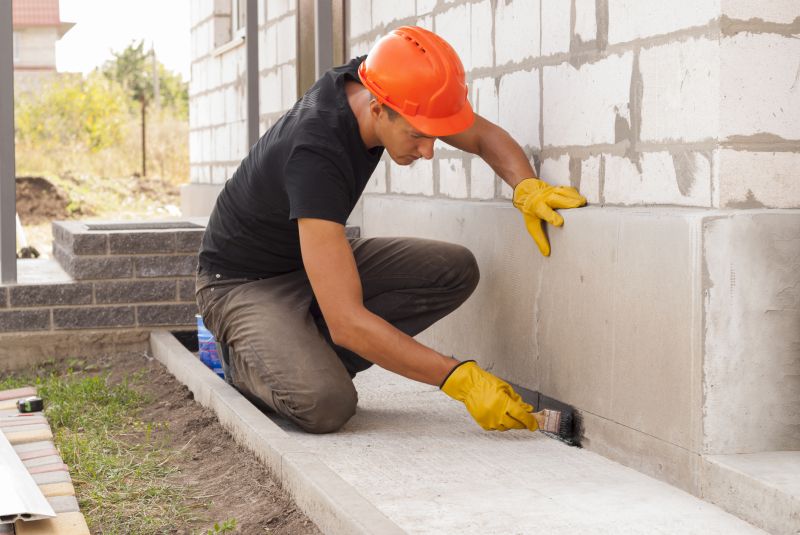 Foundation repairs are a critical aspect of maintaining the structural integrity of a building, especially in regions like Mason City, IA, where soil conditions and weather patterns can impact the stability of structures. When considering foundation repair products, it is important to understand the variety of solutions available, each designed to address specific issues such as settling, cracking, or shifting. These products are intended to reinforce, stabilize, or lift foundations, helping to prevent further damage and prolong the lifespan of the building.
Top Overall Option
Concrete Pier and Beam Supports
Concrete pier and beam supports serve as a foundational element that can be used to stabilize and lift uneven or sinking foundations. They are versatile and suitable for various types of structures, providing a solid base that helps distribute weight evenly. Properly installed, these supports can help mitigate issues caused by soil movement and settlement, offering a long-term solution for foundation stability.
Types of Products For Foundation Repairs
Soil Stabilization Grouts
Used to improve soil bearing capacity and reduce settlement, these grouts are injected into the ground around the foundation.
Helical Piers
Deep foundation supports that are screwed into the ground to provide stability for settling or shifting foundations.
Push Piers
Steel supports driven into the soil beneath the foundation to lift and stabilize the structure.
Underpinning Systems
A comprehensive set of supports designed to reinforce and extend the foundation's load-bearing capacity.
Mudjacking and Slab Jacking
A method involving the injection of a grout mixture beneath concrete slabs to lift and level sunken areas.
Crack Injection Sealants
Specialized sealants used to fill and seal cracks in the foundation to prevent water intrusion and further damage.
Foundation Repair Anchors
Anchors installed within the foundation to stabilize bowing or leaning walls.
Waterproofing Membranes
Applied to foundation walls to prevent water seepage and reduce soil erosion around the structure.
Carbon Fiber Reinforcement
Applied to interior walls to reinforce cracked or bowing walls without extensive excavation.
Drainage Systems
Systems designed to improve water runoff away from the foundation, reducing soil saturation.
Epoxy Injection Kits
Used for repairing cracks and restoring the integrity of concrete surfaces.
Foundation Ventilation Products
Products aimed at improving airflow in crawl spaces to prevent moisture buildup.
Popular Choices
Commonly used for lifting and stabilizing foundations experiencing settlement.
Preferred for their ability to support various foundation types and soil conditions.
Often selected for leveling sunken concrete slabs efficiently.
Popular for sealing minor cracks and preventing water intrusion.
Frequently used to protect basements and crawl spaces from moisture issues.
Trending for their role in enhancing soil stability around foundations.
Chosen for interior wall stabilization without extensive excavation.
Effective in managing water flow to reduce foundation stress.
Widely used for restoring concrete integrity in small to medium cracks.
Popular for stabilizing bowing or leaning basement walls.
Often installed to support sagging floors and compromised structures.
Increasingly chosen to improve moisture control and prevent foundation issues.
Many foundation repair products are engineered for different types of foundations, including concrete slabs, pier and beam systems, and crawl spaces. Choosing the right product depends on the severity of the issue, the type of foundation, and the underlying soil conditions. It is advisable to consult with a foundation specialist to assess the problem accurately and determine the most suitable repair approach.
In addition to the repair products themselves, proper installation and professional assessment are essential for effective results. Some products require specialized equipment or techniques, and improper application can lead to ineffective repairs or additional damage. Regular inspection and maintenance can also help identify early signs of foundation issues, allowing for timely intervention with the appropriate products.
Whether homeowners or contractors are addressing minor cracks or major structural concerns, understanding the range of available products can aid in making informed decisions. From simple patching compounds to advanced underpinning systems, the options are diverse and tailored to different repair needs. Prioritizing quality and compatibility with existing structures can help ensure durable and reliable foundation stabilization.
Key Buying Considerations
- Assess the specific foundation issue to select the appropriate product type.
- Consider the soil conditions and how they influence foundation stability.
- Evaluate the severity of the damage to determine if a simple repair or extensive underpinning is needed.
- Check compatibility of the product with your foundation type, whether slab, pier and beam, or crawl space.
- Review installation requirements and whether professional assistance is necessary.
- Determine the longevity and durability of the repair materials used.
- Consider the ease of access to the repair site for installation and future inspections.
- Evaluate the potential for water intrusion and select waterproofing or drainage solutions accordingly.
- Look into the product's ability to accommodate future settlement or shifting.
- Ensure that the repair products meet local building codes and standards.
- Think about the environmental conditions, such as moisture levels and temperature fluctuations.
- Review warranty options or guarantees offered by the manufacturer or contractor.
- Consider the cost-to-benefit ratio and prioritize quality for long-term stability.
- Research the reputation and experience of the contractor or supplier providing the products.
- Plan for ongoing maintenance or inspections to monitor foundation health.